

Description
Product Description
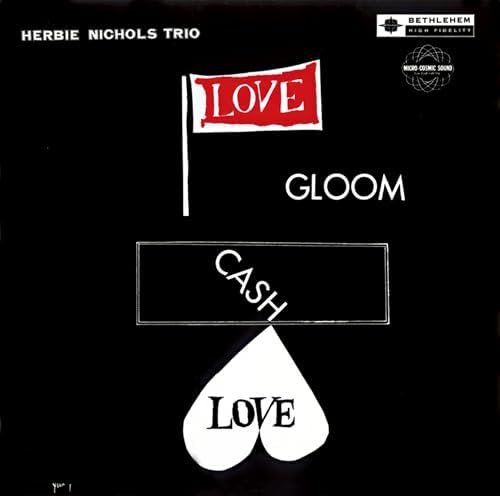
Contents Introduction Ultra-Vybe presents a recommended jazz campaign! "Amazing!! JAZZ Modern Jazz - Bethlehem Edition" is underway!! You're sure to find jazz masterpieces you've never heard of! Featuring classics and popular albums that have been passed down through generations of jazz fans, such as Mal Waldron's "Left Alone," Zoot Sims' "Down Home," Chris Connor's "Birdland Lullaby," and Mel Torm?'s "At the Crescendo," 62 representative titles + 2 compilation titles from Bethlehem, the label that built the golden age of modern jazz, are now available at a campaign-exclusive price, featuring newly written liner notes and 2024 digital remastering! [Campaign Overview] Period: May 28, 2024 (Tue) - September 1, 2024 (Sun) Special introductory price only during the campaign period Newly digitally remastered in 2024 Includes new Japanese liner notes (liner notes by Kazunori Harada and Keizo Takada) Includes bonus tracks with English lyrics Uses original jacket [Manufacturer Bonus] Coaster *Bonus will end when supplies run out. This is the only album left on the Bethlehem label by the exceptionally talented pianist/composer known for his timeless performances on the Blue Note label. In addition to a number of original songs that shine with individual beauty, it also includes covers of Frank Sinatra's hit tune "All the Way". [TRACKLIST] 1. Too Close for Comfort 2. Every Cloud 3. Augmentative 4. Love, Groom, Cash, Love 5. Portrait of You 6. Beyond Recall 7. All the Way 8. 45 Degrees 9. Infatuation Eyes 10. Crazy Pad Personnel: Herbie Nichols (p) George Duvivier (b) Danny Richmond (ds) Recording Year: Recorded in NYC in November 1957 About Bethlehem Bethlehem was born in New York on the East Coast of the United States, and within two years of its founding it had an office in Los Angeles on the West Coast, and from the late 1950s it also began releasing music from Cincinnati, Ohio in the Midwest. In Japan, domestic releases began in 1957 by King Records with not much time lag. King Records was quite aggressive at the time, releasing not only Bethlehem but also the latest modern jazz albums from Atlantic and Riverside labels under the title "American Jazz Series." From 1959, the distributor changed to Toshiba Music Industries, and in the summer of 1961, "Left Alone" was released domestically for the first time. Prestige Records began being released by Victor Entertainment in 1960, and the now exceptionally popular Blue Note Records began being released by Toshiba Music Industries as imported albums with domestic specifications in 1967 (sold with an obi strip and Japanese liner notes added to the American release), which shows how early Bethlehem was introduced in Japan. Since the 1970s, various works have continued to be reissued and loved and listened to, with different distributors including Polydor, CBS Sony, Trio Records, Nippon Columbia, Toshiba EMI, Victor Entertainment, and the current Ultra-Vybe. Bethlehem Records' works represent a captivating baton passed down from generation to generation of jazz fans. Its founder was a Swiss-born man named Gustav ?gGus?h Wildi. Looking at the initial single releases, it seems their primary goal was to enter the pop market. One of their earliest resident singers was Chris Connor, who had experience in jazz orchestras such as those of Stan Kenton and Claude Thornhill, but she was given a pop/novelty-oriented path. However, Creed Taylor, a rising producer who joined in 1954, disagreed. ?gWhy not sing the songs you want to sing, in a jazz setting??h he suggested. The resulting 10-inch (25cm) LP, ?gChris Connor Sings Lullabys of Birdland,?h sold approximately 20,000 copies (an exceptional hit considering the LP market at the time), and Bethlehem shifted its focus towards a jazz-centric direction. While Taylor was showcasing his keen talent in New York, on the West Coast, producer Red Clyde was recording a succession of West Coast jazz talents that established labels like Pacific Jazz and Contemporary hadn't yet worked with, and also signed the big-name male singer Mel Torm?. This completed Bethlehem's signature style, which was strong in both instrumental and vocal music. Since then, with producers like Lee Kraft and Teddy Charles (who is also a vibraphonist), they have continued to create works with a diverse lineup that includes vocals, instrumental performances, Black and white artists, young talents, veterans, orchestras, combos, cool and sophisticated music, funky and soulful music, and (though not included in this lineup) UK jazz. It was Bethlehem Records that first recognized the talents of Nina Simone, Bob Dorough, and Carmen McRae and produced their debut albums; that they employed up-and-coming John Coltrane and Bill Evans in several sessions; that they released a jazz album by John (Towner) Williams (who visited Japan last year for the first time in 30 years), who would later achieve great success in the field of film music such as "E.T." and "Star Wars"; and that they released the unique album "Presents," in which the orchestra led by the great composer Duke Ellington played standard numbers?all at Bethlehem. For album cover production, they employed a wealth of talented individuals, including Bert Goldblatt, who handled photography, drawing, and design. Their selection of recording engineers also showed keen taste, including craftsmen like Johnny Cue and Val Valentin, Rudy Van Gelder before he became a legend, Peter Ind, who also gained fame as a bassist, and Tom Dowd, who later achieved success in the field of rock. I can't fully grasp how much influence owner Wildey had on the content, but it's clear he didn't have a particular jazz style he favored. In any case, Bethlehem Records packages every jazz style up to around 1960 in a remarkably tasteful way. Despite the wide variety, Bethlehem's items share a common thread: they're "unpretentious," "poppy and light." Furthermore, even though the musicians and staff are jazz experts, there's no pretentious "look at me!" attitude. The fun, enjoyment, and depth of jazz resonate effortlessly through the performance, song selection, and album artwork. It's, in a sense, "top-notch casualness." It's easy to imagine how Bethlehem has broadened the base of jazz fans over the past few decades. The use of sampling material and the terms "spiritual" and "modal" likely originated later, from the late 1960s onwards. Considering this, Bethlehem might seem like a somewhat distant world to today's young jazz fans. However, I want to assure you that it's a path that anyone who loves jazz will eventually take. The era in which Bethlehem operated was also the golden age of mid-century culture. The "sloping-shoulder jazz" that this label produced is undoubtedly an "icon of the era," worthy of being mentioned alongside Eames chairs, Saul Bass title designs, and Levi's 501XX jeans. Now, in this age of 100-year lifespans, the day is gradually approaching when jazz fans of all generations can talk about Bethlehem, the "holy land of jazz," and say, "Ah, that's great." Media reviews and more: This is the only album left on the Bethlehem label by this exceptionally talented pianist/composer, known for his timeless performances on the Blue Note label. In addition to numerous original compositions that showcase his unique beauty, it also includes covers of Frank Sinatra's hit tune "All the Way," among others. (C)RS